

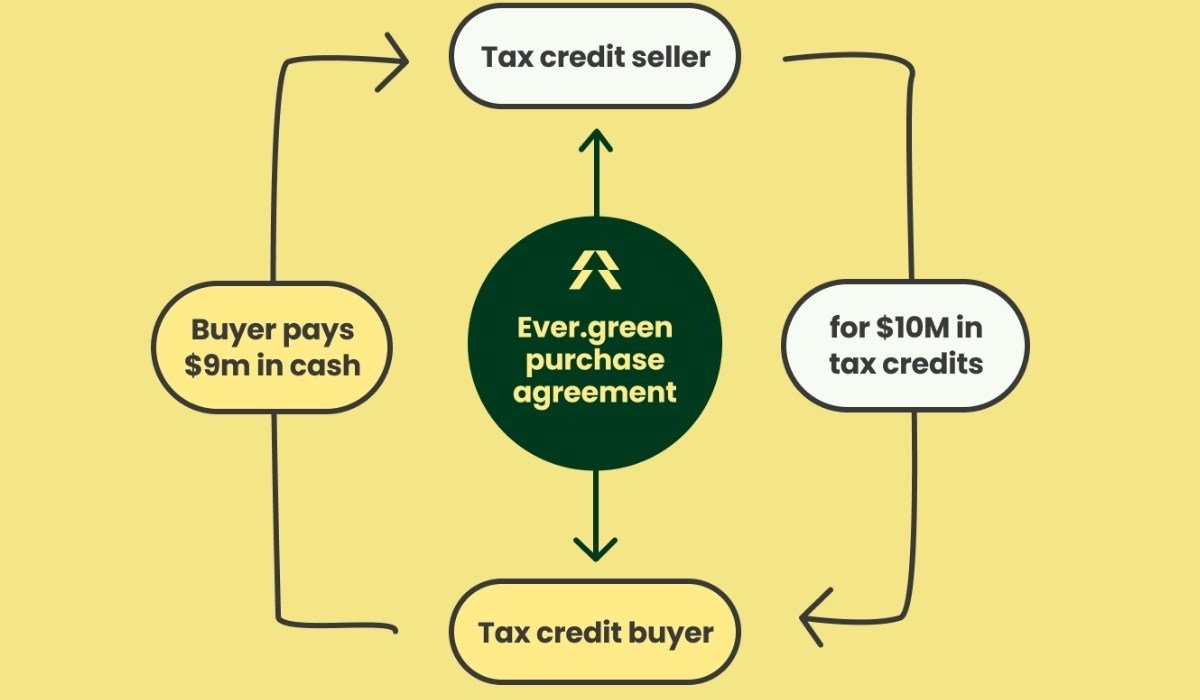
Transferable tax credits have fundamentally transformed how organizations finance clean energy initiatives, advanced manufacturing facilities, and sustainable infrastructure projects across the United States. Introduced under landmark legislative provisions, this mechanism empowers eligible entities to monetize government incentives by selling unused tax credits directly to corporate buyers for cash. By bypassing the complex, costly tax equity partnerships of the past, transferable tax credits have democratized capital access and accelerated the nationwide transition toward a resilient, low-carbon economy.
Quick Bio
- Concept: Transferable tax credits (TTCs) allow the direct sale of federal clean energy and manufacturing tax incentives for cash.
- Origin: Authorized under Section 6418 of the Internal Revenue Code via the Inflation Reduction Act.
- Primary Benefit: Provides project developers with immediate liquidity while granting corporate buyers a discount on federal tax liabilities.
- Market Impact: Streamlines project financing, expanding participation far beyond traditional institutional investors.
Evolution of Clean Energy Financing Mechanisms
Traditional project financing relied heavily on specialized tax equity structures that required immense legal overhead and deep pockets. Only a handful of massive financial institutions could comfortably navigate these bespoke arrangements. However, the introduction of transferable tax credits changed the paradigm completely. Developers can now generate credits through qualifying installations and transfer them seamlessly. This evolution has eliminated major entry barriers, making project execution faster and significantly more cost-effective for growing businesses.
Understanding the Core Mechanics of Section 6418

Section 6418 of the Internal Revenue Code serves as the legal foundation governing these market transactions. Under these rules, an eligible entity can transfer all or a portion of its specified credits to an unrelated corporate taxpayer. Crucially, the transaction must be executed in cash, and the cash payment received by the developer is treated as tax-free income, while the buyer cannot deduct the purchase price. This straightforward statutory treatment provides absolute clarity for corporate accounting departments navigating modern tax planning strategies.
Expanding Market Participation and Corporate Buyers
The ability to buy transferable tax credits has unlocked participation for a vast new universe of corporate taxpayers. Companies that previously had zero involvement in renewable energy project development can now offset their corporate tax liabilities efficiently. By purchasing credits at a modest discount to their face value, corporate buyers achieve tangible financial savings while simultaneously advancing their corporate sustainability goals. This symbiotic relationship drives billions of dollars of fresh capital into vital environmental infrastructure.
Key Categories of Eligible Clean Energy Credits
A wide array of federal incentives qualifies for transfer under current statutory guidelines. These include the Investment Tax Credit (ITC) and the Production Tax Credit (PTC), alongside newer mechanisms focused on clean hydrogen, carbon capture, advanced manufacturing, and zero-emission nuclear power generation. Each specific credit category carries its own set of technical compliance standards, bonus requirements, and prevailing wage mandates that developers must meticulously fulfill before initiating any market transfer.
Navigating the IRS Pre-Filing Registration Process
Before any financial transaction can safely occur, sellers must complete mandatory electronic pre-filing registration procedures with the Internal Revenue Service. This critical administrative safeguard requires submission of detailed project specifications, geographical coordinates, and proof of operational status. Upon successful review, the IRS issues a unique registration number for each eligible property. This registration number must be embedded within the tax returns of both the selling developer and the corporate buyer to ensure full compliance.
Rigorous Due Diligence and Risk Management Protocols

While transferability simplifies capital acquisition, buyers must still execute comprehensive due diligence to protect their corporate investments. Because the IRS retains the authority to audit underlying project qualifications, buyers face potential recapture risks if a project fails to maintain compliance over its statutory compliance period. To mitigate these exposures, sophisticated market participants routinely utilize specialized tax credit insurance policies alongside robust contractual indemnification clauses negotiated directly with project developers.
The Role of Intermediaries and Digital Marketplaces
The rapid expansion of this financial ecosystem has given rise to dedicated digital marketplaces, specialized brokers, and advisory networks. These platforms connect corporate buyers searching for tax liability reductions directly with renewable energy developers seeking immediate liquidity. By standardizing contract templates, vetting project quality, and streamlining pricing transparency, these intermediaries reduce friction and foster a highly liquid national market for transferable tax credits.
Impact on Smaller Projects and Regional Developers
Historically, smaller clean energy installations struggled to attract institutional tax equity because transaction costs outweighed potential returns. Transferable tax credits have completely leveled the playing field for distributed generation and mid-sized commercial projects. Because the administrative burden of selling credits is vastly lower than structuring multi-party partnerships, regional developers can successfully finance smaller solar arrays, localized storage facilities, and community-scale wind initiatives.
Strategic Alignment Between Finance and Sustainability Teams
Corporate adoption of transferable tax credits requires close cross-departmental collaboration within modern enterprises. Sustainability officers must work hand-in-hand with corporate finance, tax accounting, and legal departments to evaluate risk profiles and verify tax liabilities. Aligning these internal teams ensures that the volume of procured credits matches corporate tax forecasting models, maximizing the bottom-line financial impact while avoiding any potential over-purchasing complications.
Valuation, Pricing Dynamics, and Discount Rates
Pricing for transferable tax credits is dictated by supply and demand dynamics, project risk profiles, and macroeconomic interest rates. Typically, credits trade at a slight discount relative to their face value—often ranging between 85 to 94 cents per dollar, depending on the underlying technology and creditworthiness. Proven technologies like utility-scale solar and wind command higher pricing due to their lower perceived operational risks, whereas emerging technologies may offer deeper discounts to compensate buyers for higher regulatory scrutiny.
Integrating Credits Into Corporate Environmental Strategies
Procuring transferable tax credits offers a unique mechanism to bolster corporate environmental, social, and governance profiles. Unlike traditional philanthropic investments, tax credit purchases yield a direct, measurable financial return by shrinking corporate tax expenditures dollar-for-dollar. Chief financial officers increasingly embrace this asset class because it combines low financial risk with demonstrable contributions to global decarbonization mandates and national energy independence targets.
Future Outlook and Market Maturation Trends
As regulatory frameworks continue to mature, the market for transferable tax credits is projected to expand exponentially. Standardized contracts, broader insurance product offerings, and increased IRS administrative guidance are streamlining transactions further. This continuous market refinement ensures that transferable tax credits will remain a cornerstone of American infrastructure financing, driving continuous private-sector investment into clean energy innovation for decades to come.
Frequently Asked Questions
- What exactly are transferable tax credits?
- Transferable tax credits are federal clean energy and manufacturing incentives that eligible project developers can sell directly to unrelated corporate taxpayers for cash under Section 6418 of the Internal Revenue Code.
- Which entities are eligible to sell these tax credits?
- For-profit corporations, partnerships, S-corporations, and individuals who generate qualifying clean energy or advanced manufacturing properties are generally eligible to transfer their unused credits.
- How do corporate buyers benefit from purchasing these credits?
- Corporate buyers can utilize acquired tax credits to reduce their federal tax liability at a discount relative to the credit’s face value, creating immediate cash savings and improving financial performance.
- Is IRS pre-filing registration mandatory before a transfer can occur?
- Yes, sellers must complete an electronic pre-filing registration process with the IRS to obtain a unique registration number for each property, which must then be reported on both parties’ tax returns.
- What risks do buyers assume when purchasing transferred tax credits?
- Buyers assume standard regulatory and recapture risks if the underlying project fails to maintain statutory compliance, though these risks are frequently mitigated via third-party tax insurance and contractual indemnities.
